
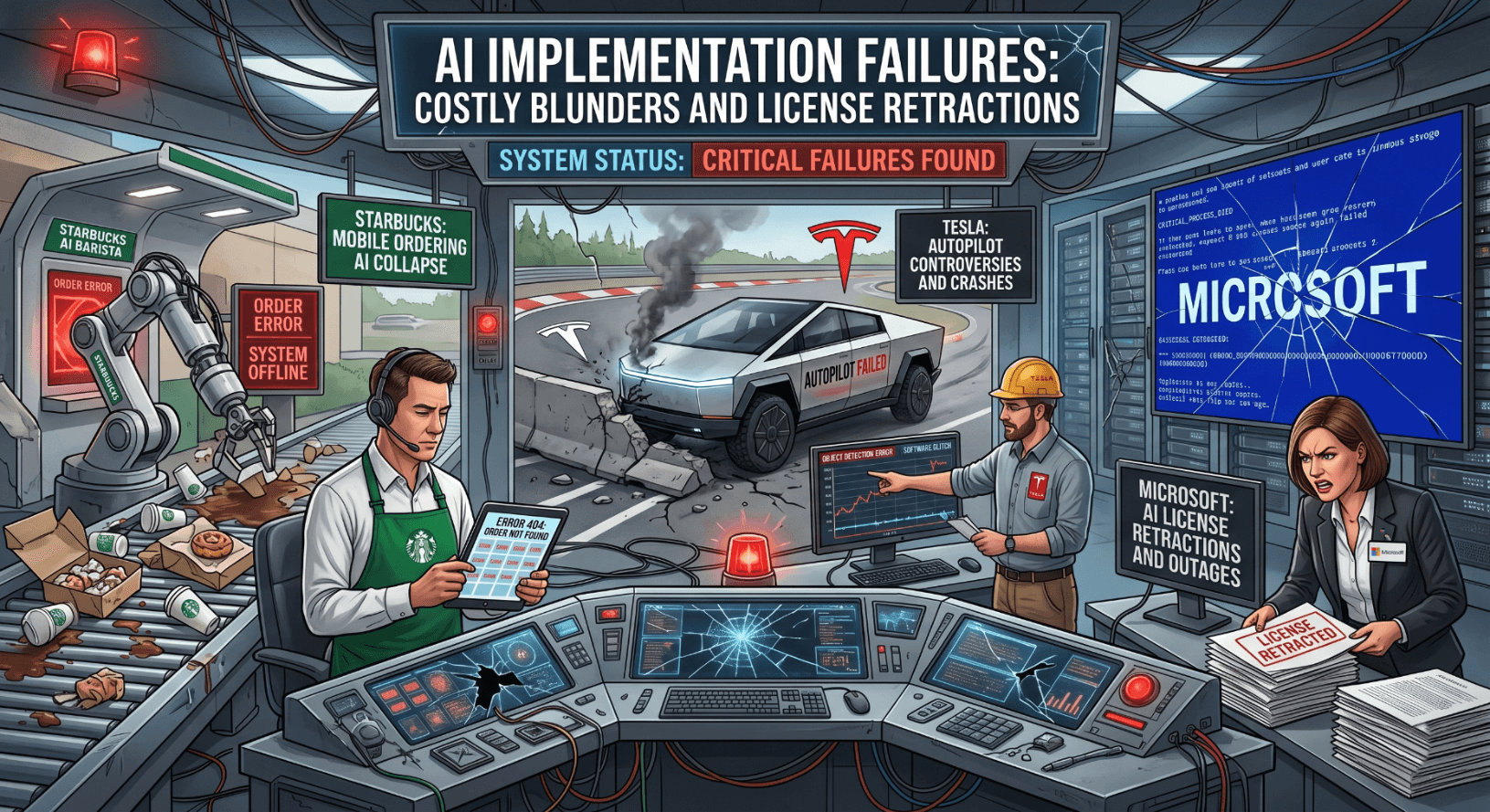
AI Implementation Failures: How Starbucks, Tesla, and Microsoft Grappled with Costly Tech Blunders and License Retractions .
AI Implementation Failures: How Starbucks, Tesla, and Microsoft Grappled with Costly Tech Blunders and License Retractions .
The rapid advancement of artificial intelligence (AI) has led to its widespread adoption across various industries, with companies seeking to leverage its potential to enhance efficiency, productivity, and customer experience. However, the integration of AI technologies is not without its challenges, and several high-profile companies have faced significant setbacks due to costly tech blunders and license retraction issues. In this article, we will delve into the AI implementation failures of Starbucks, Tesla, and Microsoft, examining the industry impact, real-world use cases, opportunities, risks, and future direction of AI adoption.
Introduction to AI Implementation Challenges
The implementation of AI technologies poses significant challenges, including data quality issues, algorithmic biases, and the need for specialized expertise. Moreover, the rapid evolution of AI technologies has led to a shortage of skilled professionals who can develop, deploy, and maintain AI systems. As a result, companies may struggle to integrate AI technologies effectively, leading to costly mistakes and reputational damage.
The Case of Starbucks: AI-Powered Customer Service
Starbucks, the global coffee chain, has been at the forefront of AI adoption, leveraging AI-powered chatbots to enhance customer service. However, the company's AI implementation efforts have not been without their challenges. In 2019, Starbucks faced a backlash on social media after its AI-powered chatbot was criticized for being unhelpful and insensitive. The incident highlighted the risks associated with AI adoption, including the potential for algorithmic biases and the need for human oversight.
Tesla's AI-Related Safety Concerns
Tesla, the electric vehicle manufacturer, has been a pioneer in the development of autonomous driving technologies. However, the company's AI implementation efforts have been marred by safety concerns, including several high-profile accidents involving its Autopilot system. The incidents have led to regulatory scrutiny, with the National Highway Traffic Safety Administration (NHTSA) launching an investigation into the safety of Tesla's Autopilot system. The case highlights the risks associated with AI adoption in safety-critical applications and the need for rigorous testing and validation.
Microsoft's AI Licensing Issues
Microsoft, the software giant, has faced significant challenges related to AI licensing issues. In 2020, the company was forced to retract its AI-powered facial recognition technology due to concerns over bias and discrimination. The incident highlighted the risks associated with AI adoption, including the potential for algorithmic biases and the need for transparent and accountable AI development practices.
Industry Impact and Real-World Use Cases
The AI implementation failures of Starbucks, Tesla, and Microsoft have significant implications for the industry as a whole. They highlight the need for companies to approach AI adoption with caution, ensuring that they have the necessary expertise, infrastructure, and governance structures in place to support AI development and deployment. Moreover, the incidents demonstrate the importance of transparency, accountability, and human oversight in AI development and deployment.
Opportunities and Risks
The adoption of AI technologies presents significant opportunities for companies to enhance efficiency, productivity, and customer experience. However, it also poses significant risks, including the potential for algorithmic biases, data breaches, and reputational damage. To mitigate these risks, companies must prioritize transparency, accountability, and human oversight in AI development and deployment.
Future Direction of AI Adoption
The future of AI adoption will be shaped by several factors, including advances in AI technologies, evolving regulatory frameworks, and changing consumer expectations. As AI technologies continue to evolve, companies will need to prioritize transparency, accountability, and human oversight in AI development and deployment. Moreover, they will need to invest in the development of specialized expertise and infrastructure to support AI adoption.
Emerging Trends and Technologies
Several emerging trends and technologies are likely to shape the future of AI adoption, including the development of edge AI, explainable AI, and human-centered AI. Edge AI refers to the deployment of AI technologies at the edge of the network, closer to the source of the data. Explainable AI refers to the development of AI technologies that provide transparent and interpretable results. Human-centered AI refers to the development of AI technologies that prioritize human values and well-being.
Conclusion
The AI implementation failures of Starbucks, Tesla, and Microsoft serve as a reminder of the challenges and risks associated with AI adoption. As companies continue to invest in AI technologies, they must prioritize transparency, accountability, and human oversight in AI development and deployment. Moreover, they must invest in the development of specialized expertise and infrastructure to support AI adoption. By doing so, companies can mitigate the risks associated with AI adoption and unlock the full potential of AI technologies to enhance efficiency, productivity, and customer experience. Ultimately, the future of AI adoption will be shaped by the ability of companies to balance the benefits of AI technologies with the need for transparency, accountability, and human oversight.